

ODM Electric Beauty Bed Manufacturer: How to Choose an Aesthetic Bed for a Professional Clinic with Madam Center
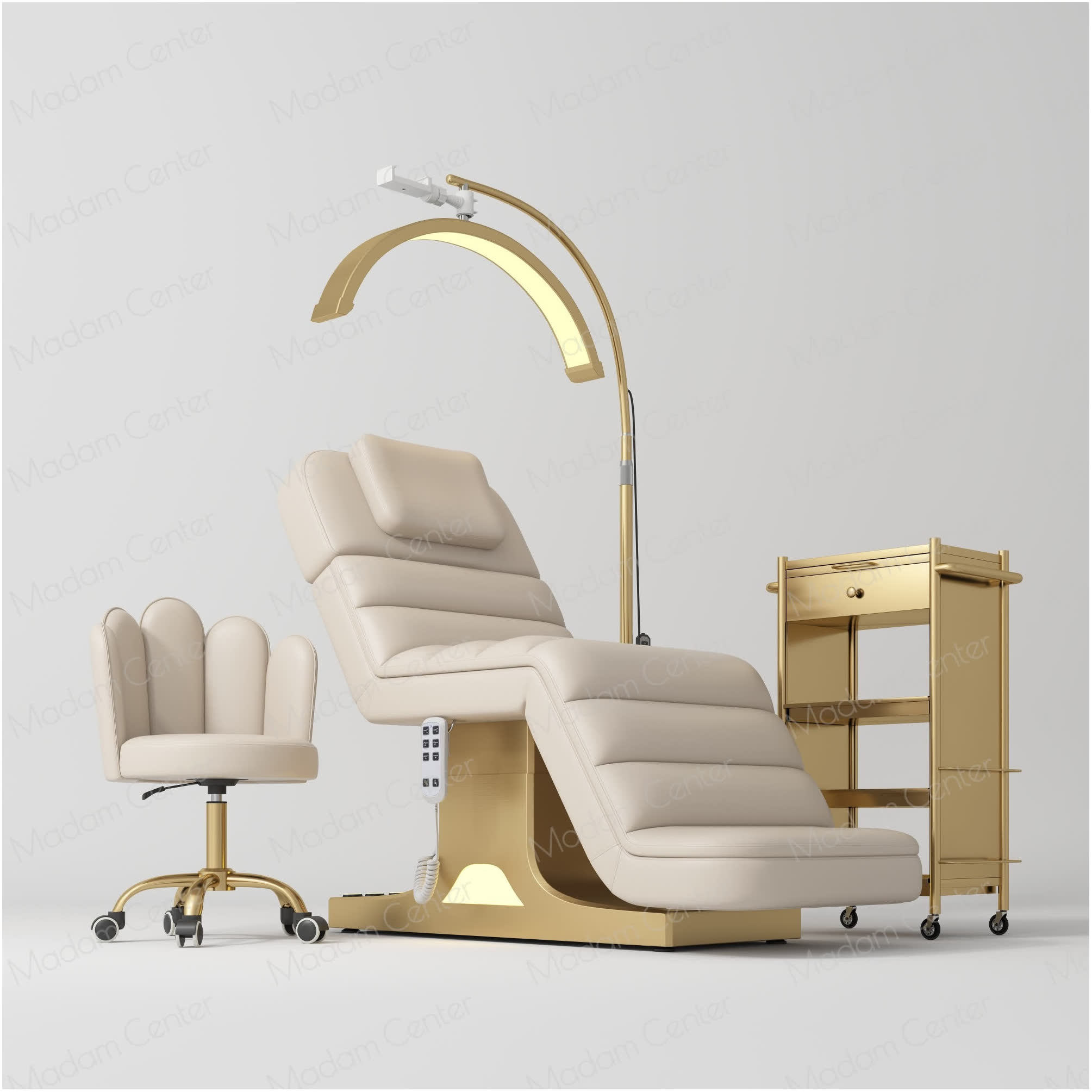
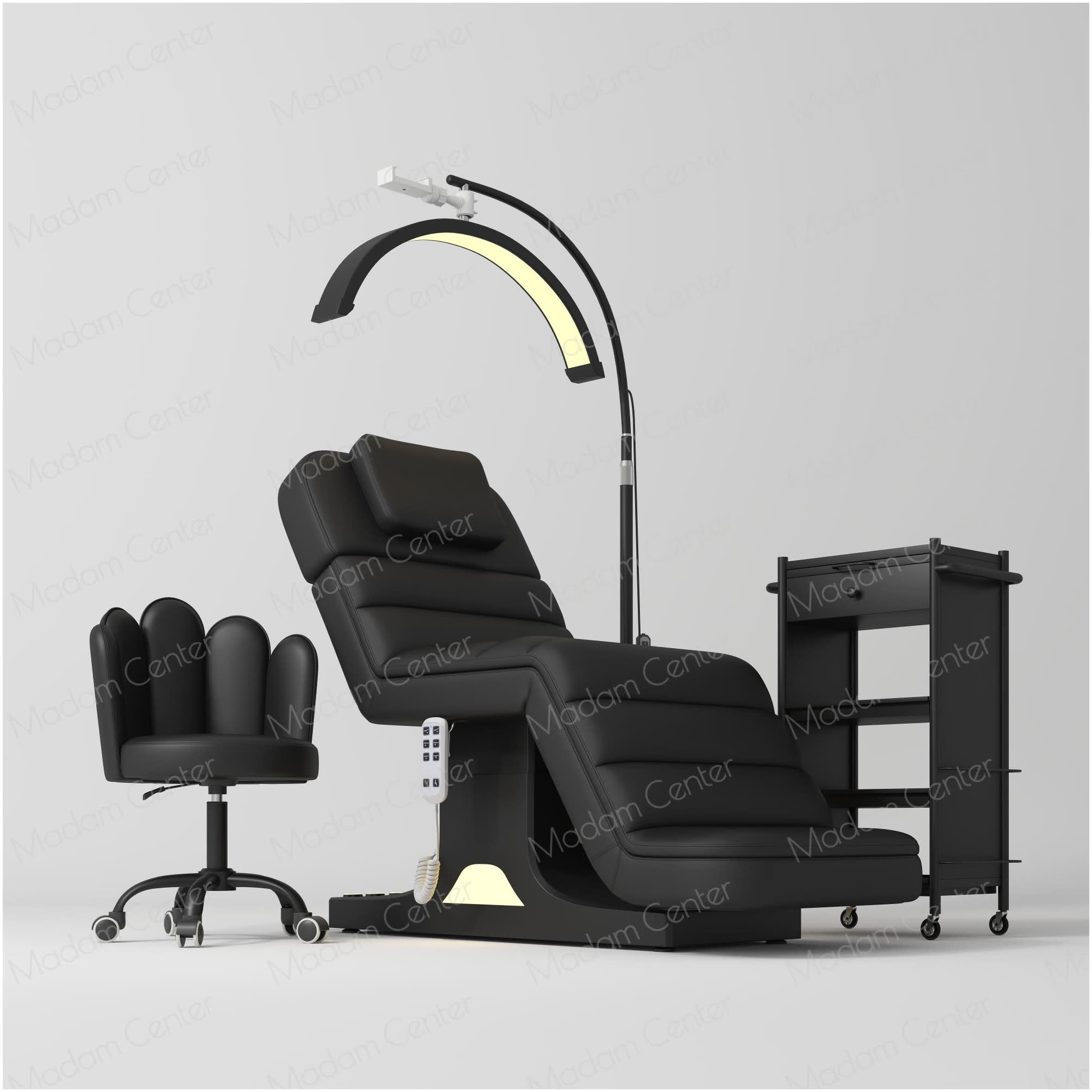
Madam Center, operating as the clinical engineering division of Create Everything Healthcare Tech (Guangdong) Co., Ltd., develops advanced ODM treatment platforms. Centered in Shunde, Foshan, the enterprise supplies high-precision electric couches to global aesthetic chains across more than 100 countries.
Map Clinic Procedures to the Required Movement Architecture
Clinical procedures impose distinct biomechanical demands on treatment furniture. Choosing an incompatible movement architecture leads to practitioner fatigue, awkward patient positioning, and procedural inefficiency. Sourcing begins by aligning motorized articulation directly with your clinic primary treatment offerings.
For non-invasive facial rejuvenation and chemical peels, standard treatments require precise elevation travel and independent backrest articulation. A reliable three-motor platform allows practitioners to alternate between seated and standing postures while supporting the patient cervical spine.
Precision facial injections require rigid head stabilization and micro-adjustments in torso inclination. Dual-side base foot controls and programmable memory presets allow clinicians to adjust patient angles hands-free while preserving sterile protocols. High-intensity laser therapies and body contouring require four-motor platforms equipped with Trendelenburg whole-bed tilt, optimizing target access under surgical task lighting.
Choose Controls Around Practitioner Workflow
The control interface determines procedural efficiency and sterile integrity during daily clinic appointments. Requiring clinicians to adjust patient positioning using handheld remotes during invasive procedures increases contamination risks and slows treatment turnover.
Madam Center incorporates diverse control configurations across its professional models. The MRC1210B Electric Beauty Bed pairs a responsive wired remote for initial patient onboarding with a floor foot pedal for hands-free height adjustment. For advanced procedures, the TR2608 Medical Aesthetic Bed integrates four synchronized motorized columns, dual-side base rocker switches, and automated one-touch reset functionality to streamline treatment changeovers.
Select Materials and Construction for Repeated Professional Use
In high-volume medical spas, treatment furniture undergoes relentless mechanical cycling and continuous chemical exposure. Standard vinyl upholstery rapidly hardens and cracks when subjected to hospital-grade sanitizing wipes, creating unsightly tears and hygiene vulnerabilities.
Madam Center prioritizes medical-grade silicone leather on platforms like the MRC1210B. Silicone leather resists alcohol, body oils, and chemical peels while providing a supple hand feel. Internal cushioning combines a high-density structural base foam with resilient memory foam toppers, supported by a laser-cut, robotically welded steel chassis designed for loads up to 300 kg.
Use an ODM Change Hierarchy to Control Scope
Original Design Manufacturing allows commercial buyers to develop tailored aesthetic beds on proven mechanical chassis. However, unmanaged design changes can trigger tooling delays and compliance re-testing. Implementing a structured change hierarchy helps procurement teams control development timelines.
Branding and Finish Changes Keep the Base Architecture Intact
The fastest ODM customization tier alters aesthetic surfaces without modifying the underlying mechanical chassis. Clinics can specify bespoke corporate pantones across silicone leather or commercial vinyl, adding contrast stitching and debossed logos to headrests.
Applying custom metallic finishes, such as champagne gold electroplating, brushed brass, or matte black powder coating to base panels, reinforces brand identity without affecting motor travel or electrical compliance.
Material and Dimension Changes Need New Sample Validation
Adjustments to platform dimensions, foam densities, or decorative trims alter chassis balance and load distribution. Modifying couch widths to 85 cm or 90 cm accommodates diverse client body types but requires mechanical testing to verify base stability.
Similarly, introducing specialized timber veneers or engineered stone trims requires physical pilot sample fabrication. Sampling allows engineering teams to verify seam alignment and ensure that modified contours maintain smooth ergonomic transitions.
Control and Functional Changes Affect the Operating Configuration
Altering control layouts modifies electrical harnesses and operator workflows. Upgrading from single floor foot pedals to integrated dual-side base switches requires redesigning internal wiring channels.
Programming custom memory presets into digital motor control units streamlines clinical turnover. Adding modular extendable headrests or detachable foot extensions expands multi-service utility, enabling one platform to support facials, injectables, and podiatry.
Structural or Electrical Redesign Requires Engineering Feasibility
Fundamental mechanical redesigns, such as altering scissor-lift linkages or changing actuator stroke travel, require formal engineering feasibility reviews. Modifying load-bearing pivot points demands dedicated CAD stress simulations and endurance cycling.
Engineering custom dual-voltage power systems (110V/220V) or internal battery backups requires dedicated electrical safety certification. Managing these complex revisions through structured engineering phases ensures ultimate operational reliability.
Freeze the ODM Specification Before Bulk Production
To guarantee manufacturing consistency across multiple clinic locations, Madam Center enforces strict sign-off gates. Dimensional CAD drawings, electrical schematics, and load ratings are frozen before fabricating a functional pilot unit.
Clients audit the pilot sample for motor acoustics, cushion support, and seam alignment. Once approved, linear actuator models, power supplies, and material batch numbers are archived in a master specification baseline that governs all future production runs.
Frequently Asked Questions about ODM Aesthetic Beds
Should Buyers Start with Appearance or Treatment Functions?
Buyers should always start with treatment functions. Motorized movement axes, load capacities, and practitioner control interfaces dictate daily clinical efficacy. Exterior aesthetics and color selections can be finalized once mechanical suitability is confirmed.
What Is the Difference Between OEM and ODM in This Project Context?
OEM involves manufacturing equipment to client-supplied technical drawings. ODM involves customizing a manufacturer’s proven proprietary platform with tailored dimensions, branding, control interfaces, and surface finishes, reducing development costs and lead times.
Can Every Bed Feature Be Changed Through ODM?
No. Surface finishes, upholstery, dimensions, and control peripherals are readily customizable. Core structural chassis geometry and primary motor linkages are standardized to preserve structural safety and electrical compliance.
Why Should Controls Be Specified Separately from Motor Count?
Motor count defines the bed mechanical movement axes, while control interfaces dictate how the practitioner interacts with the equipment. Specifying foot pedals, hand remotes, or memory presets ensures the bed matches specific clinical workflows.
What Should Be Approved Before Bulk Production?
Lock the motor configuration, control switch layouts, upholstery color codes, foam density, electrical voltage (110V/220V), and crating standards before approving mass production.
Start ODM from a Stable Base Model
Developing a custom aesthetic couch through ODM combines speed, mechanical reliability, and brand distinction. Anchoring bespoke features to proven engineering platforms guarantees clinical performance while eliminating manufacturing risks.
Clinic directors and aesthetic distributors are encouraged to collaborate with Madam Center. Reach the ODM technical department or inspect proprietary platform configurations at https://www.madamcenter.com/.
Madam Center
Madam Center
Legal Disclaimer:
EIN Presswire provides this news content "as is" without warranty of any kind. We do not accept any responsibility or liability for the accuracy, content, images, videos, licenses, completeness, legality, or reliability of the information contained in this article. If you have any complaints or copyright issues related to this article, kindly contact the author above.
